Using this time of self-isolation at home I thought I would spend some time writing up some of the inspirational and interesting stories told to me by fascinating characters I have met over my decades in Asia. Some of these stories are covered in my three life story books on South East Asia and India and some have been told to me by elderly Myanmar citizens for my Myanmar Oral History Podcast.
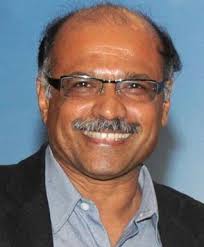
Continuing with theme of those with a military background is the life story of Captain GR Gopinath (known as ‘Gopi’ to most). Like many Indian life stories Gopi’s starts in the early 1950s in a small village called Gorur about four hours west of Bangalore. There were eight children in the family and his father was both a schoolteacher and a farmer. Each morning he would go to the fields at daylight, until it was time to catch the bus to school. He would return home around 5.30 and, after dinner, he would spend time teaching each of his children. He never once complained of his “boring” and monotonous life and explained to Gopi that he was comforted by a view of Bertrand Russell that a large part of education must be to teach people to accept boredom, because that is the reality for most lives.
But not for Gopi. One day while he was still in primary school the headmaster came into the class and announced there was a scholarship for a military boarding school and asking if anyone was interested. Gopi’s hand shot up and he found he was the only one interested. He says there is a poem in his local language of Kannada which inspired him. It roughly translates that there is life beyond the village temple and its neighbouring woods, and one should “go for it”. There was a catch that the exam was in English and, at that time, Gopi only spoke the local language. He naturally failed. It was here that fate played its hand. The headmaster pointed out to the military authorities that, if they wanted bright young Indians in the military, to only test in English would cut out a huge number of potential candidates. They allowed him to take the test in Kannada which he passed. Very few people in his village ever left and so the whole village came to see him off. His father accompanied him on the first eighteen-hour bus and train trip to Bijapur and Gopi remembers his father sitting next to him reading passages from the trial and death of Socrates and talking to him about Gandhi.
Of the students who attended the military school only three made it into the National Defence Academy, India’s equivalent of West Point or Sandhurst. Gopi graduated as an officer and promptly found himself in the 1971 war with Bangladesh and Pakistan. He hated the senselessness of war and exited the military after eight years and returned to his village without any plan for his life. His parents were extremely embarrassed. Virtually no one in the village had the opportunity to leave and here was Gopi as a young Captain with a stellar career ahead of him quitting. And worse than that he had no plan as to what he was going to do next.
There are many fascinating stories of what Gopi did do next, but I would like to conclude with the one that started his business career. Gopi eventually decided after hanging around the village for months he wanted to be a farmer. His father and uncles begrudgingly provided him some remote family land the Government had given them and had never been farmed. Gopi moved there with a tent, a Doberman dog and a Dalit boy (the lowest Indian Hindu caste) who worked in the family home. He decided to go into silkworm farming and for that to grow mulberry trees to feed silkworms. However, he had no money. He worked hard improving the land but was going nowhere. One day the local bank manager came to see this eccentric man who everyone was talking about. He was impressed with what Gopi wanted to do and helped him prepare a loan application which was approved, subject to him providing collateral which he did not have. So, everything ground to a halt. But one day he says Manje Gowda, an old man with a neighbouring piece of land, came to see him. He told Gopi he had heard stories that Gopi needed collateral and offered his own title deeds as security. Manje said the reason he was prepared to do this was because Gopi’s hard work, frugal lifestyle and use of ecological techniques were wonderful examples for his children and he could tell he could trust Gopi to honour his obligations. Within a few years of receiving the loan, Gopi became the largest silkworm producer in the State and won the prestigious Rolex Award for Enterprise based on his ecological farming. Now, he could really “go for it” and which Gopi has certainly done over the years as a serial entrepreneur.
 Peter Church blog