
I became interested in Buddhism when I was in secondary school at Shore in Sydney during the 1960’s. It was a Church of England school so understandably we were taught the principles of the Christian faith. However, I can remember asking the school chaplain in my mid teens if we could learn a little about other religions and I am pleased to say, not long after this, we were given an introduction to the world’s other major religions. Through this, I became interested in Buddhism and have tried to follow its principles over the decades since I left school.
In the late 80s and early 90s I had the opportunity to visit Myanmar many times and realised there was an opportunity for me to spend time in a Yangon monastery and to be ordained as a monk. Buddhism is unusual in that to become a monk does not require one to undertake years of study but instead that you firstly agree to follow the eight precepts all Buddhists follow – often called “the Noble Eightfold Path” which include right speech (e.g. not lying, not gossiping, avoid abusing others), right action (e.g. not killing living creatures, not stealing and avoiding sexual misconduct) and right livelihood (e.g. avoiding unsavoury businesses like prostitution which cause or could cause harm to others). Secondly, monks are expected to follow a further 227 rules and failure to comply with any of them could lead to their expulsion from the monk-hood.
There were two main reasons why I embarked on this adventure. The first was to experience life as a monk in a developing country which, at that time, had not been touched by western materialism. In neighbouring Thailand it was a common sight to see monks wearing designer sunglasses, using modern mobile phones and wearing expensive watches. This was not the case in Myanmar. The second reason was to observe how Buddhism worked in practice. There was a third unexpected benefit in that my son, Nick who was then 13, was able to join me.
I should also point out that my experience of monkhood was extremely short as I was only in the monastery for 3 days. With Buddhism, one can become a monk for just a day. In Myanmar it is frowned upon if one does it too much but there was an elderly monk in my monastery who told me he had been ordained dozens of times.
Let me explain what Nick and I experienced. On Saturday 8th January, 1995 at 5.30AM we arrived at Mahasi Sasana Yeiktha (“Mahasi”) together with the two Burmese Buddhists who were my proposers; namely U Aung Gyi (and his wife, Daw Yin Yin Kyi) and U Than Shwe (and his wife, Daw Khin Win). They both worked for the Ministry of Industry and I had been working closely with them on a project over a long period time. They had been able to arrange for all the necessary permissions. For a Buddhist to propose someone to become a monk is considered to earn that person merit for his next life. Normally a parent would do it for his or her child, so it was an unusual experience for these officials to do this for an adult and, even more unusual at that time, to propose a foreigner.
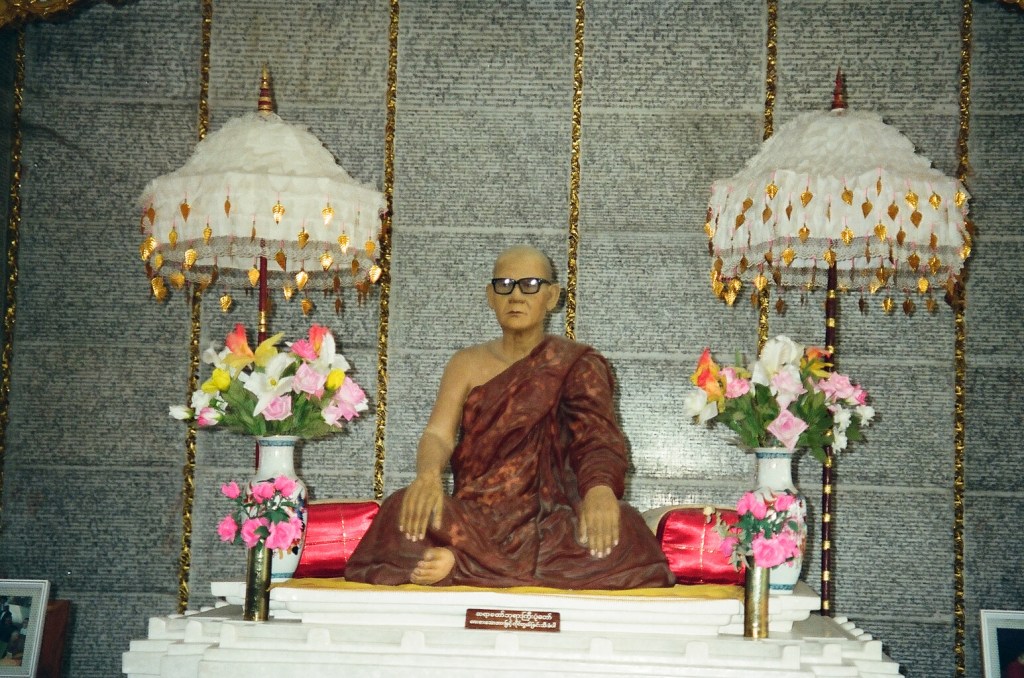
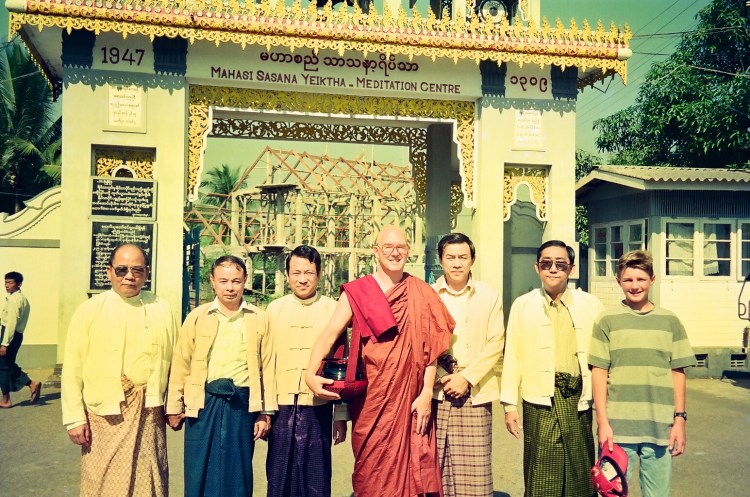
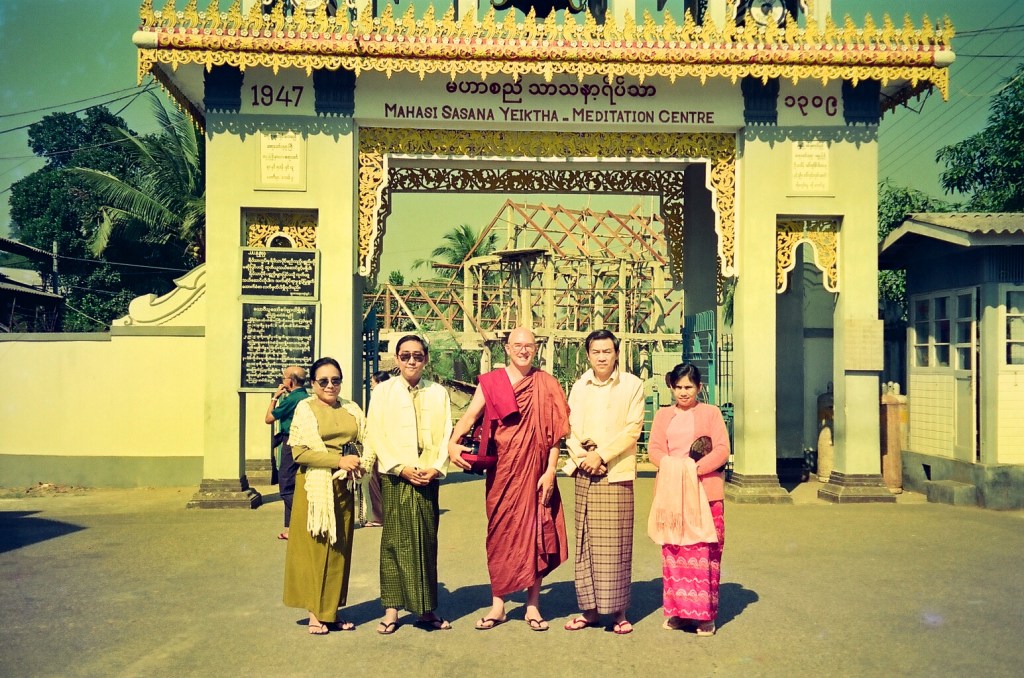
I have called Mahasi a monastery but it is, strictly speaking, a meditation center specialising in Vipassana meditation but which also functions as a monastery. It was founded in 1947 by the Venerable Mahasi Sayadaw – “sayadaw” means “monk” – who was born in 1904, became a novice monk at the age of 6 and a monk at the age of 12. He spent much of his life teaching Vipassana meditation; eventually at the center which took his name after he died in 1982 – see photo. Monks and others from all over the world who are interested in meditation, come here to study Vipassana meditation.
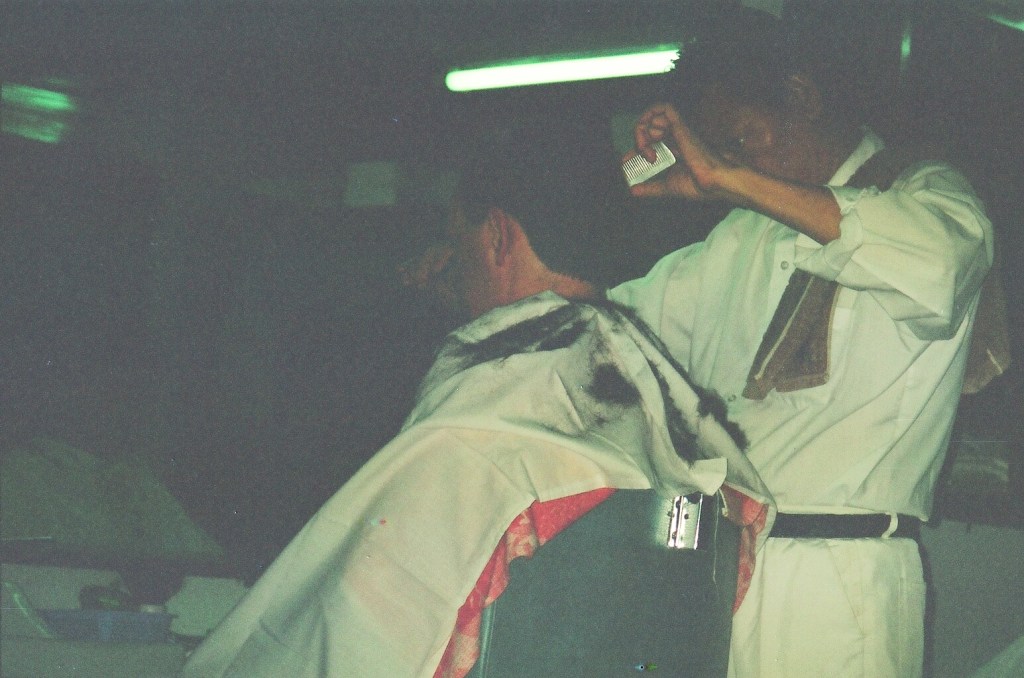
As soon as we arrived, we were taken to a wooden cottage where the monk who was to perform my ordination poured water over my head which fell onto my shirt and longyi (a Burmese sarong). Someone then shaved off my hair using a German cut throat razor which I had purchased (along with a second) as a donation – see photo. I had been advised they usually used Chinese made cut throats and that my new razors were very much appreciated. My sponsors held a white cloth into which my hair fell. Following this, I was sent to a bathroom to bathe in cold water and then return to the room wearing my longyi and wet shirt.
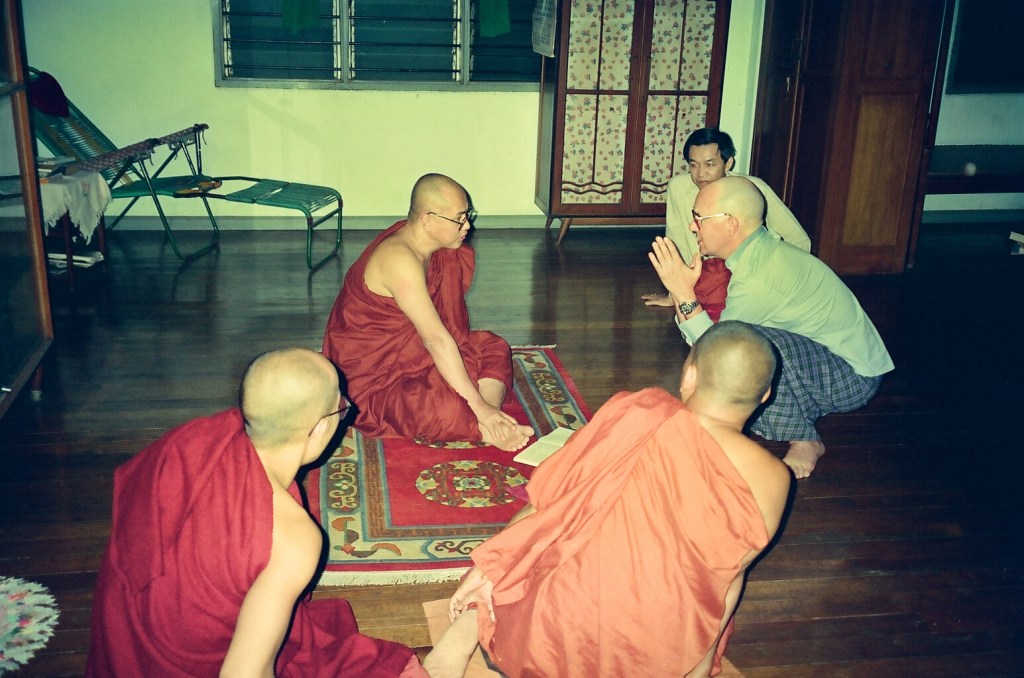
At 6.30AM I went to meet my teacher who was a senior monk and who gave me my monk name of “Nanavara”, which I understand is a Pali word; Pali being the traditional language of Buddha (who, as I am sure you know, was Siddhartha Gautama, a minor Indian royal prince, before he abandoned that life, founded the religion and became Buddha). I have tried to find what the name means without success, but believe it has some honourable meaning like “truth”. I found this meeting with my teacher excruciatingly painful as I had to squat for at least 45 minutes without stretching – see photo. My teacher conducted a ceremony in which I had to repeat Pali words he recited and at the end of which I was a novice monk and dressed in monk’s robes.
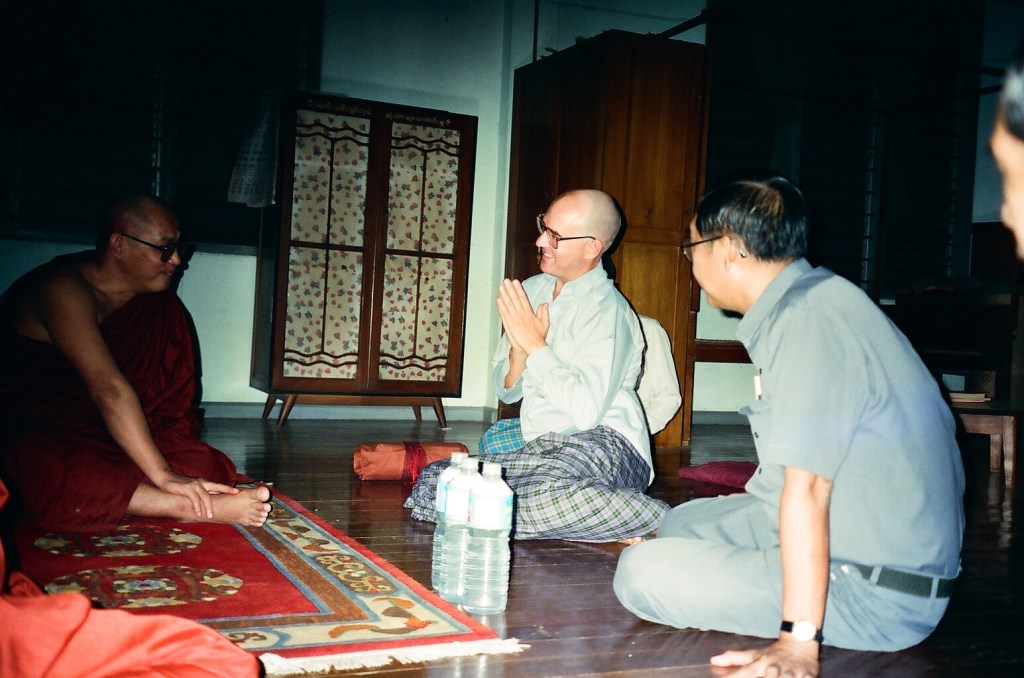
At 7.30 I was taken to my “cell” where my proposers and Nick were waiting. My proposers had kindly bought several bottles of water, toothpaste and toothbrush, toilet paper and books on meditation. The monks had kindly given Nick the cell beside mine. When I say “cell” that is what they called them but, in fact it was a small very clean room with a bed, a wooden chair, a bamboo mat and a window. Nick’s was identical to mine.
At 8AM Nick and my proposers left. Nick was to have stayed with me but he suddenly felt ill and the best place for him to be cared for was at a small hotel owned by Burmese friends. Nick’s handwritten notes of that day record, almost with surprise, that he had “my own personal room”. Fortunately by the next day he had largely recovered.
The balance of the day was spent following the timetable set out in the daily schedule –see below. You will see monks are only allocated 4 hours sleep a night. Whilst this seems extremely short, I think it may be enough given that most of the other 20 hours is spent meditating.
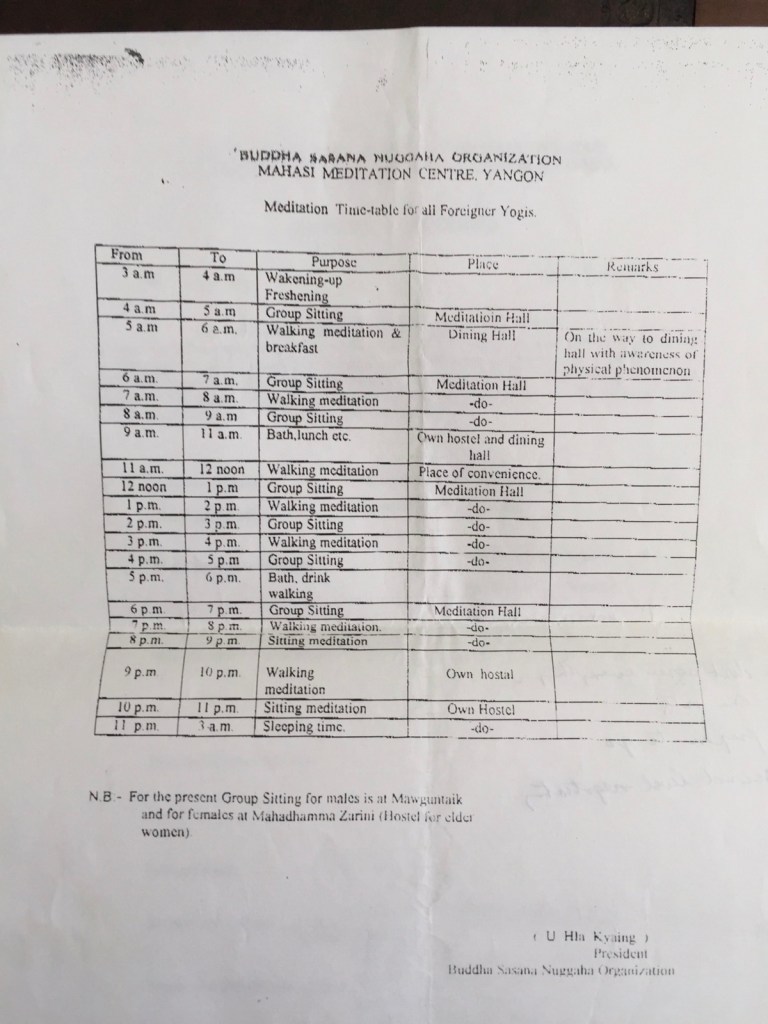
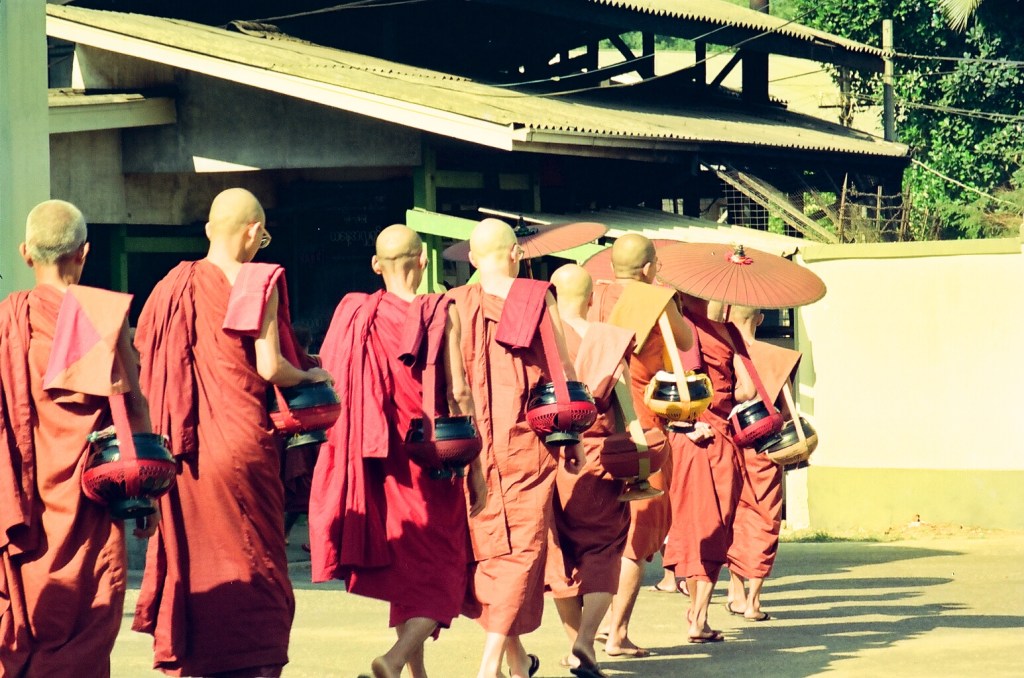
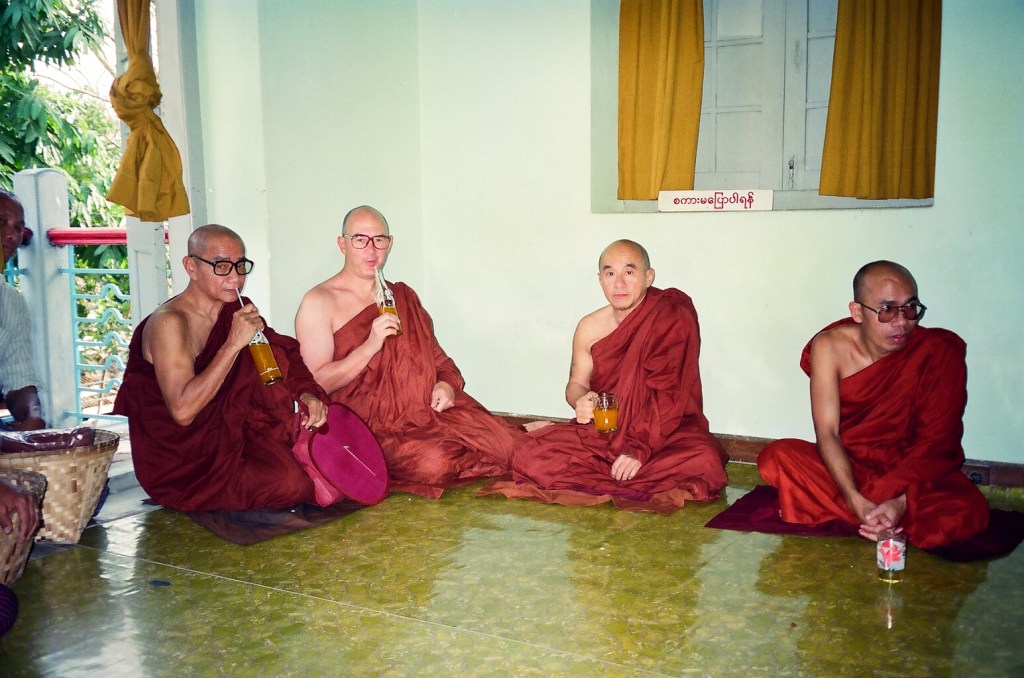
You will see the second meal of the day takes place in the time slot of 9 to 11AM. Monks, nuns, novices and visitors line up in order of their ranking (see further below) in two long lines (one for monks and one for nuns) and slowly walk to their separate dining rooms – see photos.
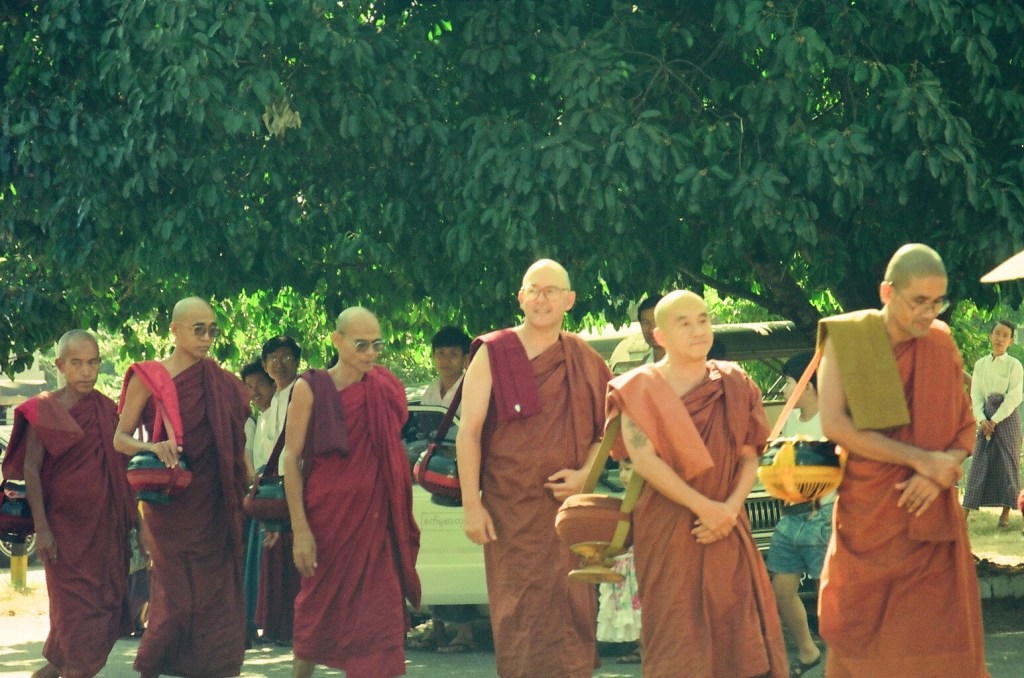
I was seated with an Indian monk, a Malaysian monk called “Buddhawangsa” and a Thai monk – see photo.
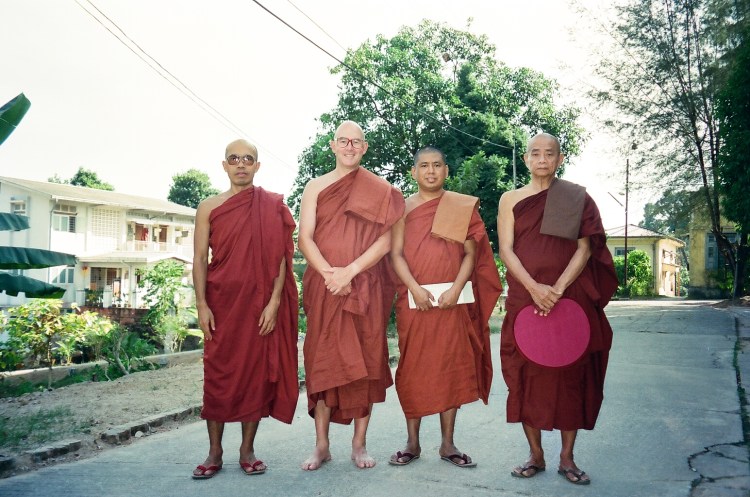
There were two surprises for me at the meal.
Firstly, I expected to be walking the streets around Mahasi to receive food from the residents which I would place in my “alm’s bowl”. In the west we often call these wooden bowls, “begging bowls”, but nothing could be further from the truth. A monk can only take what he is offered; he cannot ask for anything. Food could be sitting on a table right in front of the monk but, unless and until, he is offered the food he must leave it there. As Mahasi had over 500 monks, nuns and novices we would have caused the residents living within walking distance of Mahasi to be severely affected. These residents would feel compelled to offer whatever food they had, even if it meant them doing without. The solution was for Mahasi to have a massive kitchen where donors provided food and/or money. At the time I was staying at Mahasi, the meals for each day were donated by a different family, usually in memory of a departed family member.
Secondly, I was very curious as to what we would be eating in our two meals a day. From completion of the second meal there would be no further meal until around 5.30AM the following morning, although of course one could drink water. So as I watched food being placed on my plate I noticed that some of it looked very like chicken and tasted very like chicken. I knew Chinese vegetarian food can be made to look and taste like meat, but I was sure this was chicken I was eating. I quietly asked one of the monks at my table who spoke English what we were eating. He replied “chicken”. Remembering one of basic precepts of Buddhism is not to kill living beings this came to me as somewhat of a shock. I asked him how we could eat chicken when it involved the killing of an animal. He had no difficulty in answering this question by saying “Oh, provided we do not kill the chicken, it is ok.” I started to realise that the Eightfold Noble Path I mentioned above was likely to be interpreted quite differently by different groups of Buddhists. For example, Right Action, is interpreted by some Buddhists as meaning one should not drink alcohol at all and, by others, that it is ok to drink alcohol as long as it is not to excess.
As you will have seen from the photos of the lines going in for a meals, we each carried our alm’s bowls. Servers put food on each table and we took what we wanted and placed it in our alm’s bowls and ate with our hands – see photo. The meal usually consisted of boiled rice, a meat dish of chicken or pork, a vegetable dish, a soup, bananas or melon, cake and tea or coffee. I must say the food was excellent.

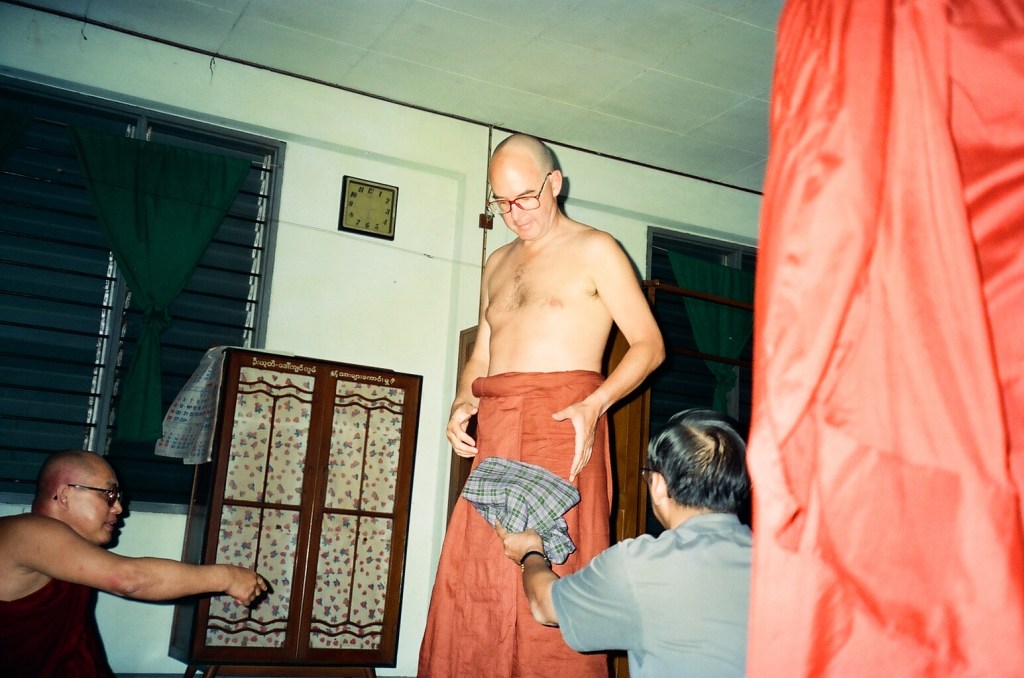
Following lunch I joined in the program for the rest of the day but I went to bed at 9PM as Nick and I had only had 4 hours sleep in the last 24 as we had flown from the Maldives to Yangon via Singapore. There was a simple thin mattress on the bed which was nevertheless comfortable. I was told to sleep in my sarong and to use the robe we cover our upper body as either a blanket or sheet. Other than my toiletries and the books on meditation I had been given, the only possessions I “owned” were my sarong, robe, alm’s bowl, sandals, a fan and one other item my proposers forgot to give me until after the ordination ceremony. This was a small piece of cloth like a small sarong which was just wide enough to tie around my waist and just long enough to cover my genitals. I was told monks should wear this when washing so they do not get tempted to masturbate! I am pretty sure one of the 227 extra precepts I mention a monk must follow includes a prohibition of masturbating.
I was allowed to “sleep in” to 4.30AM when I washed my face, cleaned my teeth and was taken down to the room of the warden who is responsible for foreign monks. He tried to teach me how to wear the monk’s robes. I was proficient at the sarong but the robe needed constant readjusting for the whole time I was at Mahasi. There were, in fact, a couple of different ways of wearing the robe for different ceremonies and functions. There was also a string belt we wore around our waist and on which hung a key to the padlock with which we locked our cells. I was quite surprised that we all had to lock our cells each day, given the basic precept of not stealing and that we had little in our rooms. It was explained to me they were not worried about monks stealing, but about visitors and thieves in the neighbourhood.
At 5.15 AM I left the warden and was instructed to do walking meditation until it was time to line up for breakfast. It is a strange sensation to see hundreds of monks and nuns walking slowly by themselves in the pre-dawn. Some looked to me like the “grim reaper” as they pulled the robe up to almost completely cover their heads.
I should mention one other important fact about Mahasi. It is a silent monastery and one is only permitted to talk to other monks or nuns in the slot set aside for bathing before lunch and in the early evening. There was no talking at meals. And perhaps you will be interested to know, monks do not “wolf” down their meals, but instead to chew each mouthful slowly and deliberately. For someone who has always eaten quickly, this was quite a challenge.
After breakfast I went back to my cell to prepare for the ordination ceremony which was to commence at 8AM. There were two questions which I had to answer at the ceremony and which I found rather strange. I was to be asked “Are you a human being?” The reason for this question was apparently at some stage a “naga” (dragon) pretended to be a man. The other question was “Are you a free man?” The reason for this is that, in early years of Buddhism in India, I was told slaves were known to escape from their masters and become monks. This seems strange to me because slavery is one of those prohibited professions and I would have thought Buddhist monks would give refuge to runaway slaves.
I was then taken to the ordination room where I could see Nick, my proposers and a number of officials from the Ministry of Industry, as well as other guests. I was the only person that morning to be ordained as a monk. The senior monk took me through the questions, a couple of which I have mentioned above. A prayer in Pali was then read out. I was then asked to wait while the monks witnessing the ceremony decide whether or not to accept me into the monkhood – see photo.
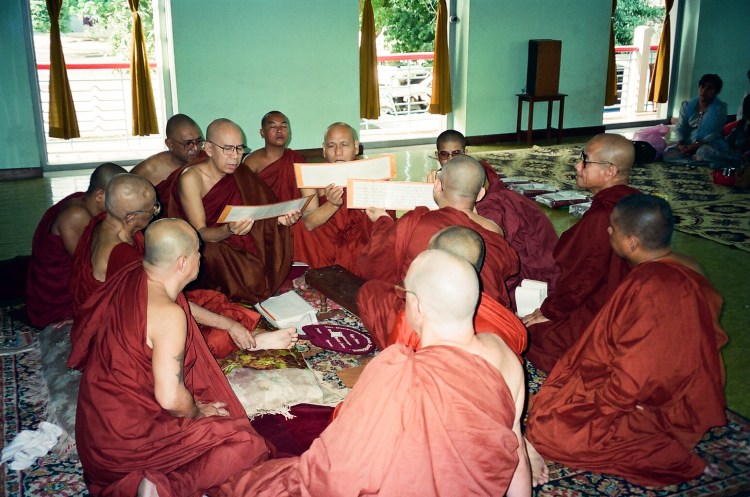
I must have passed as I was then called to sit in front of the senior monk who explains some of the key rules with which I must comply or risk automatically being “disrobed” (i.e. thrown out of the monkhood). Amongst these are sexual intercourse (even with an animal I am told!) and killing living things (curious in the context of my meal). With the completion of these explanations I became a monk. I had been seated facing the senior monk and his assistants. Upon the change in my status I was instructed to sit beside the other monks and face the guests – see photo. There followed a 30 minute sermon in Burmese.
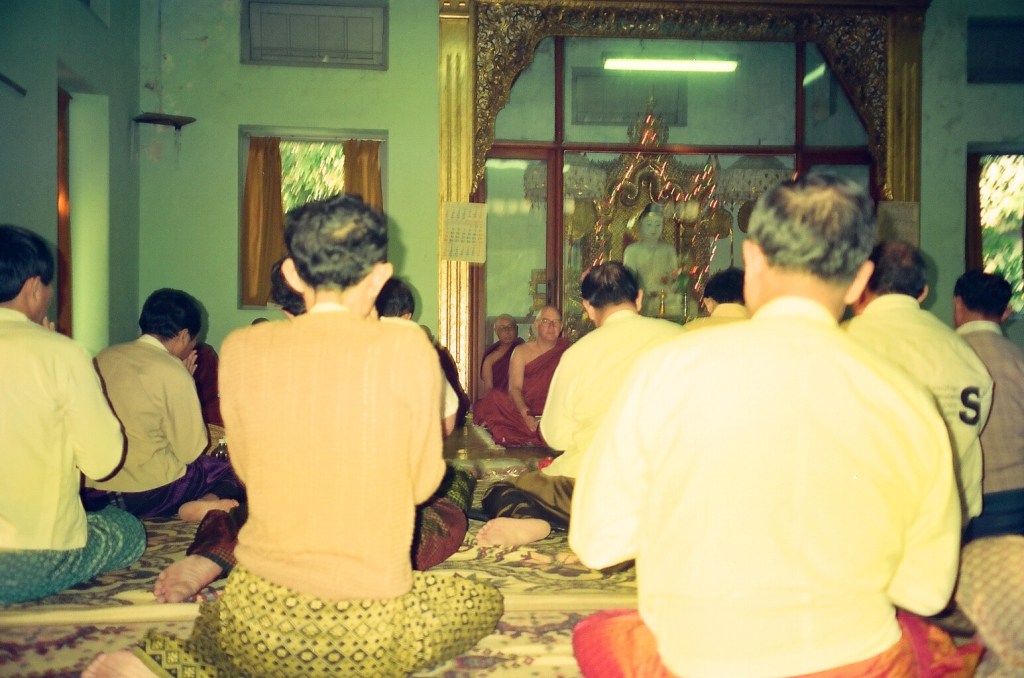
Following this, my proposers poured water drop by drop into a bowl –see photo. As they were doing this, one of the monks recited a prayer in Pali reciting the good deeds of the proposers, including their sponsoring me for ordination. I was told the water is a symbol of the good deeds and when it is poured into the ground, news of the good deeds will spread through the earth.
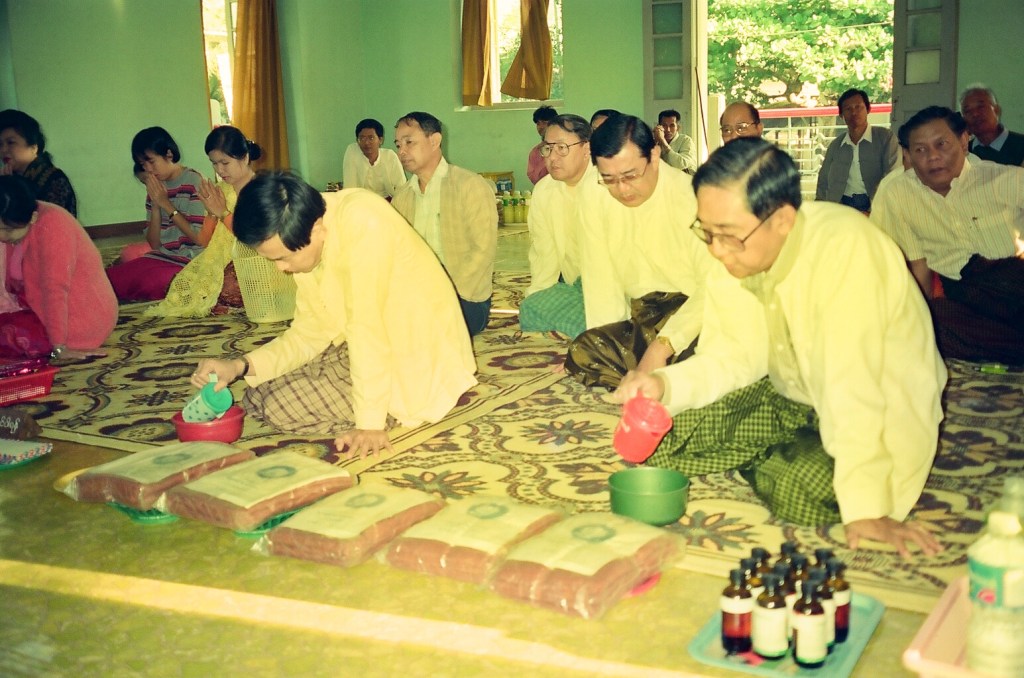
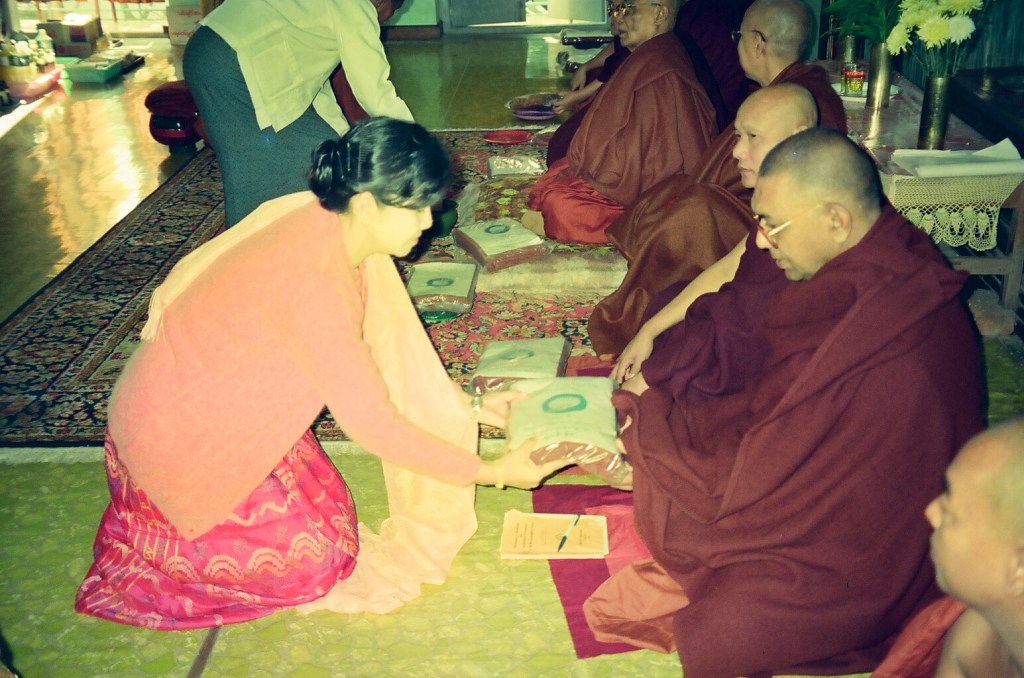
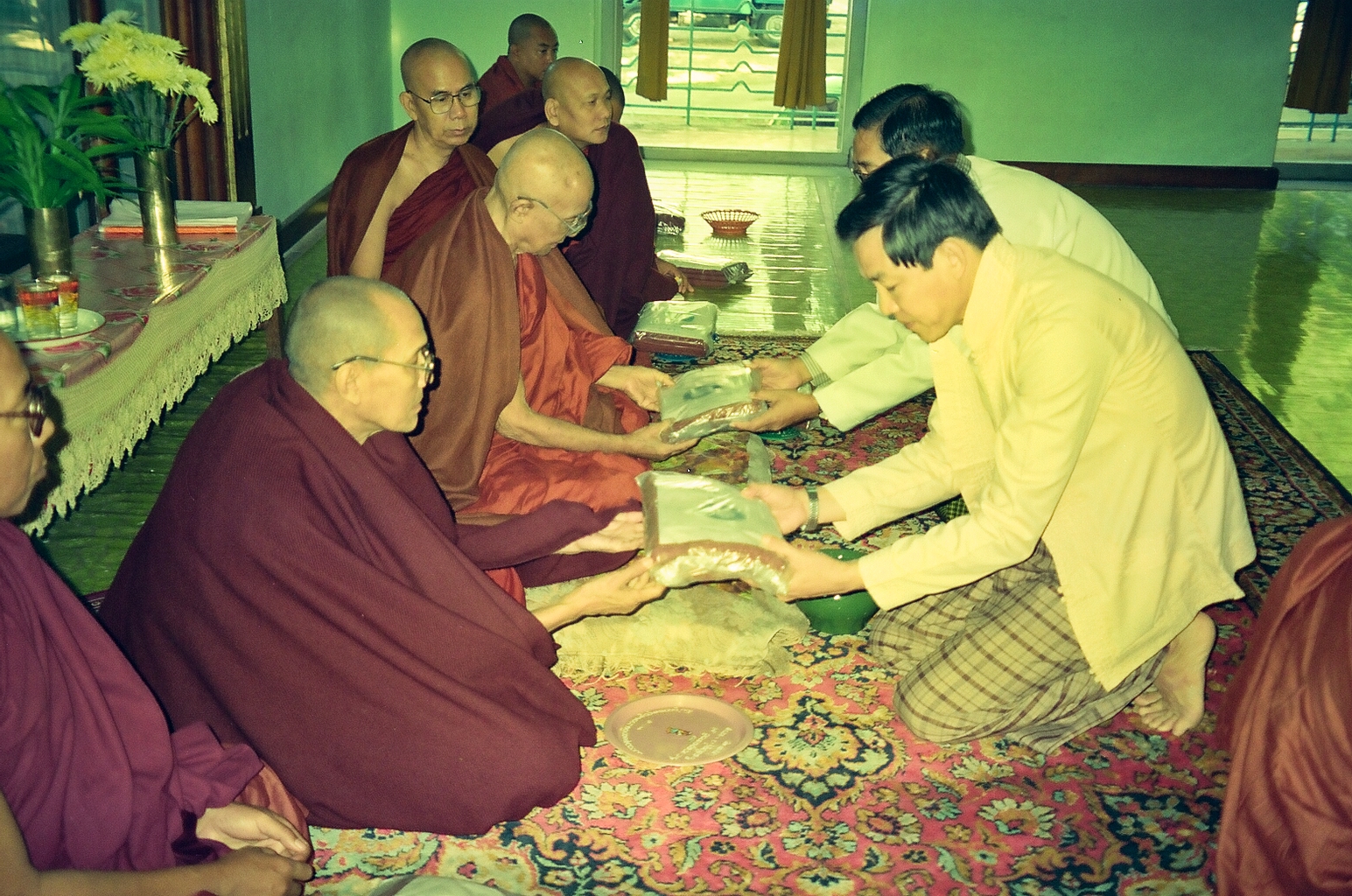
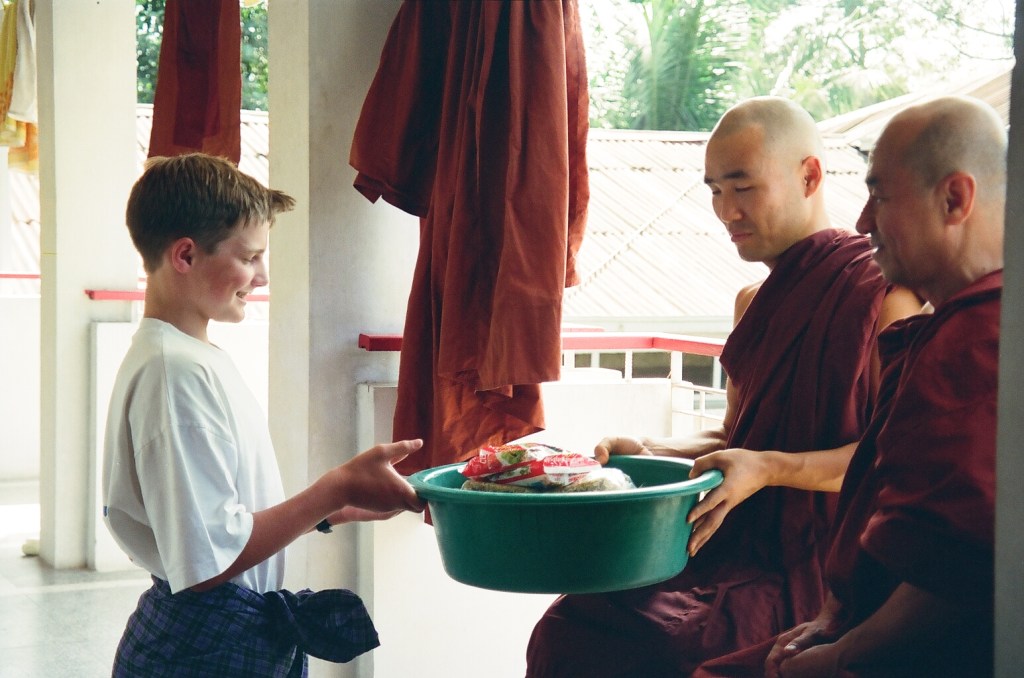
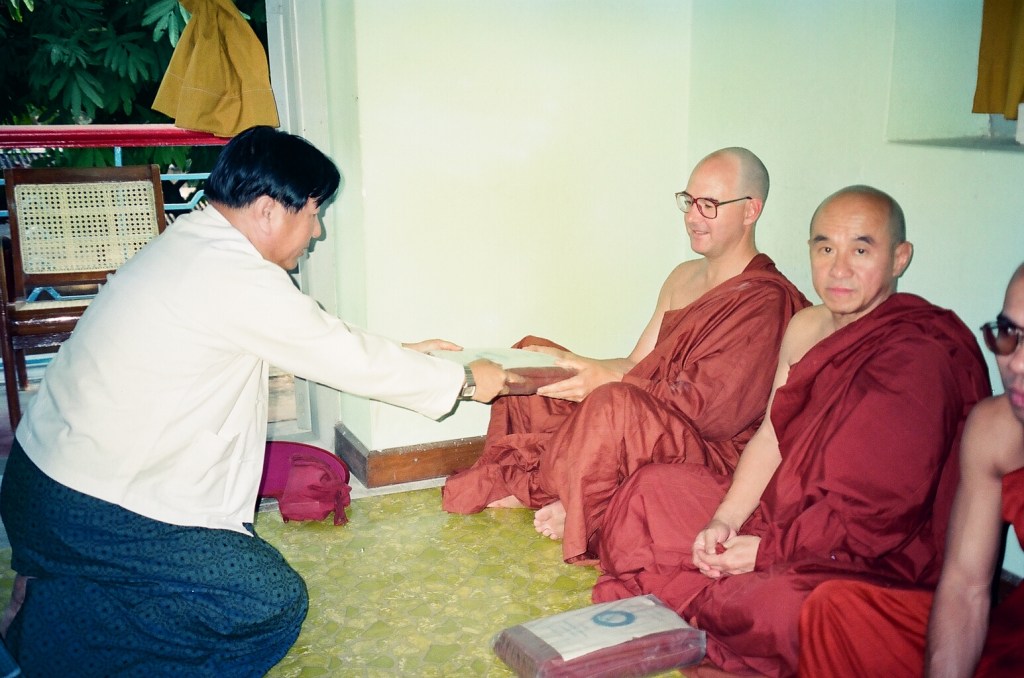
The ceremony ended with my proposers and other guests making gifts to each of the monks at the ceremony (including me) – see photos. The gifts were mainly robes, food and toiletries. These gifts were put in a basket and a lay person was selected to accompany the monk and carry the gifts back to the monk’s cell. This led to a strange experience for Nick and me. As soon as Nick and I saw each other we started to give each other a hug but were stopped by a senior monk. He explained that, for as long as I was a monk, Nick was not allowed to touch me and, on approaching me, he was required to kneel on the ground in front of me and bow three time with his head touching the ground. Sad to say, Nick has not continued this practice post our time in Mahasi!
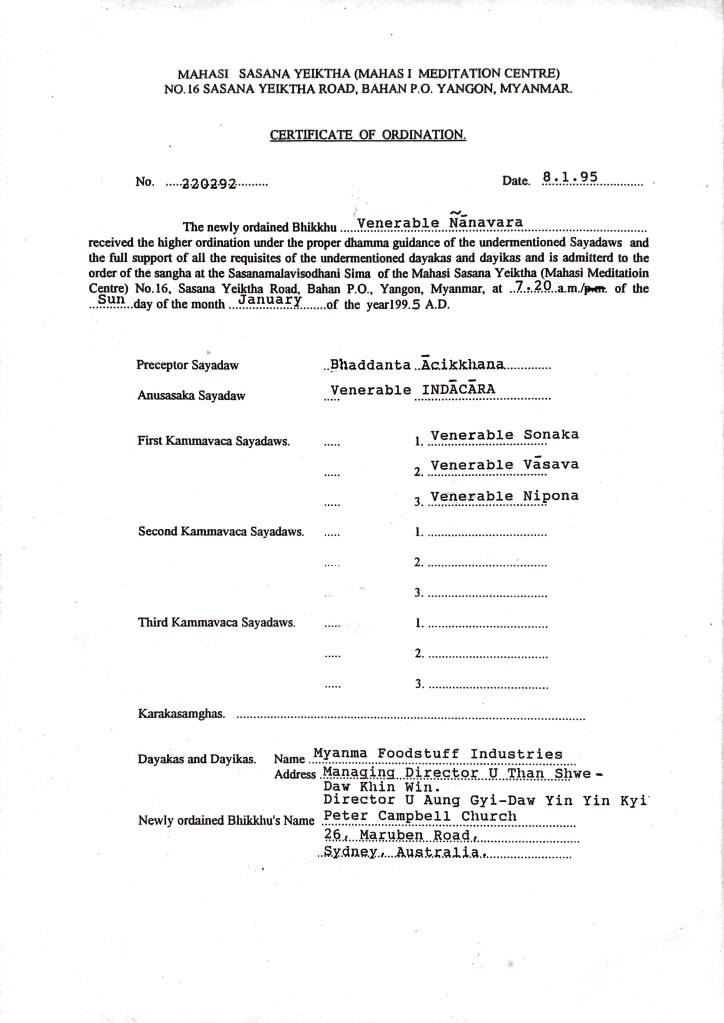
I was given a certificate – see photo – which sets out the details of my ordination. I was very surprised to learn that monks are accorded seniority based on the exact time they were ordained, rather than seniority based on merit. I am not sure how they do it, but I was told that somehow incompetent senior monks are usually appointed to roles where they cannot do damage. However, of course, this all depends on having competent monks at the top making decisions.
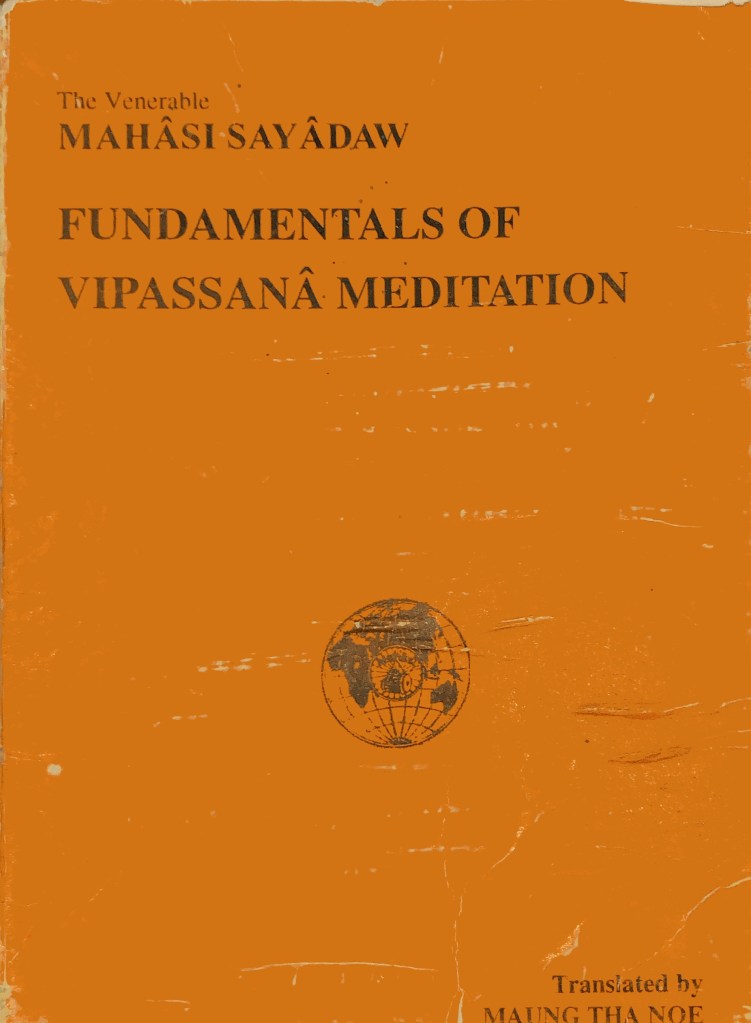
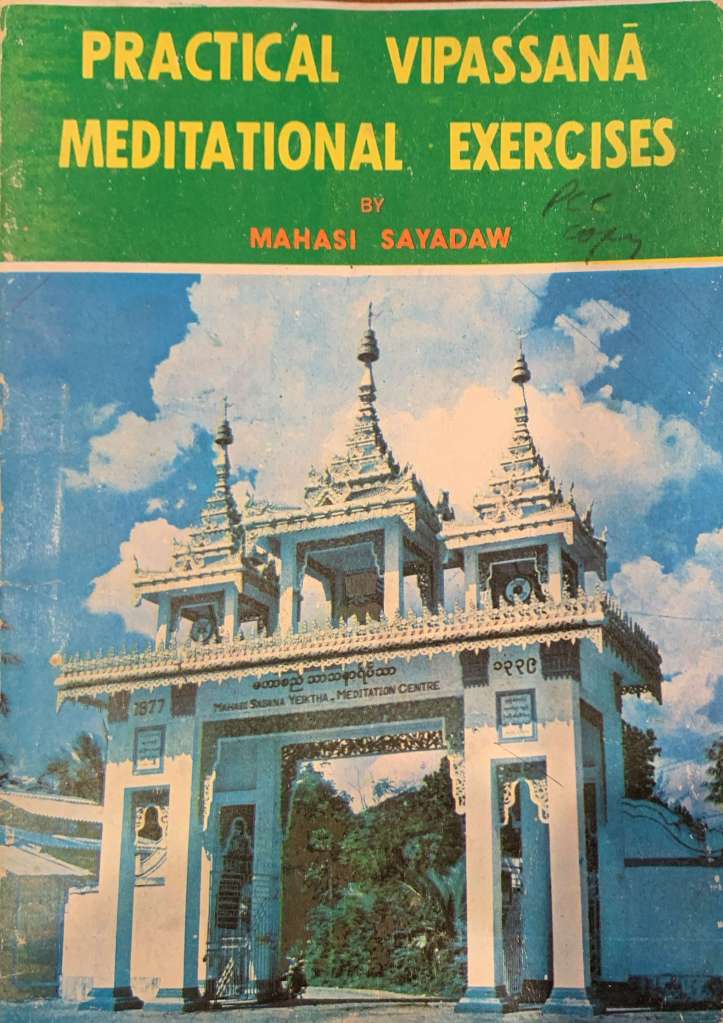
Shortly after the ceremony I was taken to meet the monk who would be responsible for teaching me meditation. This teaching is based on what Mahasi Sayadaw learnt – see photos of the covers of two of his books. As my instructor could not speak English he played a 10 minute tape in English spoken by Mahasi Sayadaw. In fact I found reading Mahasi’s books and watching the other monks to be more helpful. Whilst Mahasi operated primarily on silence we were allowed to talk to each other in the 5-6PM slot each day. My time with my instructor was over in time for me to join the line for lunch at 10AM.
As I have mentioned already one is expected at lunch to eat very slowly and not to talk. When I quietly asked a monk on my table what I should be doing, I got glares from one of the senior monks who had their own table at the front of the room. The custom was, as soon as you finished, you stood up and left the dining hall, although I tended to wait for the other monks on my table.
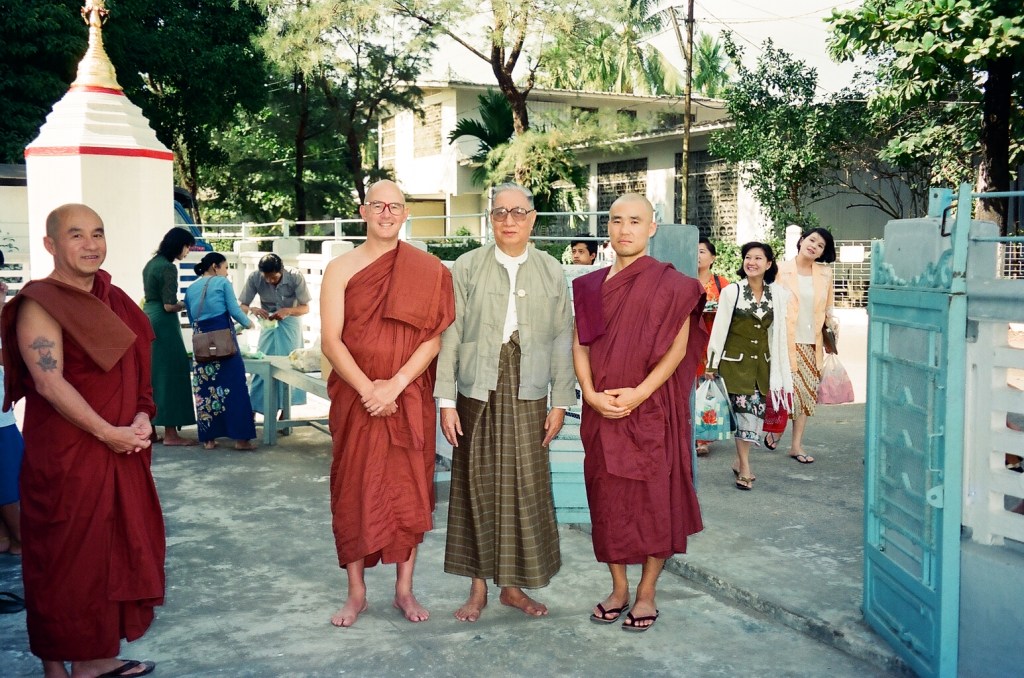
Nick, my proposers and several of the officials from the Ministry of Industry had stayed for lunch and after it was over we gathered together for photos – see photos– before they all left. Nick was still not feeling 100% and we decided it was better he stayed another night at the Best Inn where I knew he would well taken care of.
I then had a second meeting with my instructor when he suggested I speak as little as possible while I was at Mahasi and to concentrate on meditation. I was then advised to join the walking and sitting one hour meditations which alternate each hour between 12 noon and 4PM.
I found sitting meditation extremely difficult, even though foreign monks were allowed to use a cushion. Sitting for one hour without moving was a new experience for me. I had read in my meditation guide that, if you ignored an itchy nose or on some other part of the body, the itch would eventually disappear. I found this to be true and have used this technique many times since. But I am afraid my limbs were just not accustomed to being in the crossed leg position and, try as I might, I had to move every ten minutes or so.
I enjoyed walking meditation. The aim was to walk as slowly as one can and to concentrate on all the individual movements of walking, such as the heel of one foot touching the ground with the weight slowly moving through to the ball of that foot. At the same time as your weight comes onto the ball of your front foot, the heel of your trailing foot comes off the ground and your weight then moves to the ball of that foot before your back foot comes off the ground as it then moves past the other leg and the heel of that foot then touches the ground. We did our walking meditation on a 25 meter long covered verandah where the floor was covered with cool marble tiles. It was fascinating. I would walk as slowly as I could and noticed that, when I had nearly completed walking both ways, some of the other monks had barely moved a quarter of one way!
Following these four hours of meditation each of the four foreign monks and the foreign meditators were interviewed by the instructor to see how we were going with their meditation. We waited in line and a bell was rung to indicate it was the next person’s time. As I had just started, my interview was over very quickly!
I was then in the 5-6PM slot for bathing, drinking and walking and decided I wanted to ring Nick to see how he was feeling. There was only one public phone at Mahasi but there was a problem as monks are not meant to touch or be involved with money so I had to ask a lay woman who was nearby if she could make the call for me which she kindly did and, once Nick was on the phone, she passed it to me. Fortunately Nick was feeling much better and had agreed with U Aung Gyi that he would bring him to Mahasi the following day at 9AM.
Not long after making the call, U Aung Gyi popped in to visit me in my cell for a few minutes to check I was ok. He was a senior official and I felt quite uncomfortable that he insisted sitting on the floor rather than the chair or bed.
Just before I started the 6PM meditation I had a chance to have a chat to the Malaysian monk, Buddhawangsa, who spoke English. He told me that there was a Japanese yoga teacher staying at Mahasi who wanted to be ordained. However, his proposers lacked the funds to pay for the cost of the ordination, so I offered to arrange for Nick to donate the missing balance. This was accepted and led to him becoming a novice the next day and that he would be ordained on Tuesday before I left Mahasi.
I participated in the sitting and walking meditation from 6 to 9PM and then returned to my cell to read one of my books on meditation but fell asleep after an hour.
At around 3AM I heard monks getting up and doing the sitting meditation from 4 to 5AM but did not rise myself until 4.30AM to be in time to do some walking meditation before breakfast.
I then participated in the sitting and walking meditation up to 9AM when I met with U Aung Gyi and his wife who had kindly dropped Nick at Mahasi. This was the time for washing and lunch.
Following lunch, I participated in the meditation program through to 9PM when Nick and I retired to our cells. Nick, of course, did not have to participate in the meditation program and spent most of the day wandering Mahasi and occasionally popped in to see how I was going. U Aung Gyi and his wife were extremely kind and popped in again during the 5 to 6PM break to give Nick some sandwiches as they knew a teenage boy would be hungry and there was no need for him to follow the rules for Buddhist monks who only eat twice a day with the second meal completed by midday.
On Tuesday morning I decided to participate more or less in the full program and got up at 3.30AM so I could participate in the sitting and walking meditation before breakfast. I woke Nick shortly before 5AM so he could have a quick wash before joining the line for breakfast. Being now a monk I had moved up the line from the day before, whereas I think Nick as a new arrival and being neither a monk or novice was at the end. After breakfast, I participated in the walking and sitting meditation up to 9AM, whereas Nick went back to bed! It was on my way back from meditation I met U Aung Gyi and his wife who wanted to discuss the arrangements for my disrobing and leaving Mahasi. We agreed 5PM.
I then washed and got ready for lunch. We had to wear our robes a different way for lunch as a wedding had taken place that morning at Mahasi and the couple had donated the funds for our lunch that day. This new method of wearing our robe involved the robe being wound tightly around one arm. Mine kept falling apart.
After lunch Nick and I returned to our cells and we set about donating everything I had received to the other foreign monks – see photo.
As I had made the donation which enabled the Japanese monk be ordained I was invited to participate in his ordination ceremony. I was told this was a great honour for a 3 day old monk and I really appreciated the gesture.
As I knew I would be leaving later that day and would be participating in the ordination ceremony for the Japanese monk, Nick and I spent the next couple of hours talking to monks in the building where our cells were located and who had also decided not to participate in the meditation program for a few hours. Clearly one was not expected to participate in every meditation session, but I am sure if one was seen not to be participating enough, you would be asked to leave. This gave me a chance to discuss a number of Buddhist concepts with these monks such as a re-birth. I found I was not alone in believing that this need not be interpreted literally. I compared the Christian concept of “heaven and hell” with the Buddhist concept of “rebirth”. Both encourage one to lead a good life with the former sending a non believer who has not led a good life to “hell” whereas a Buddhist who fails to lead a good life is likely to be reborn as a lesser human or other living being.
At 2.30PM Buddhawangsa and I met with the senior monk who was to conduct the ceremony for the Japanese man. We had to recite a Pali prayer before we entered the ordination room. I was told that at the point one is ordained it is considered one is pure.
The ceremony for the Japanese monk was not remarkable as it was identical to mine except that this time, along with the other monks conducted the ceremony, I received the gifts from the proposers which, immediately after, I redistributed to Buddhawangsa. There is however, one particular memory of the ceremony. I was sitting beside Buddhawangsa and noticed a number of ants heading towards us. My instinct was to brush them away which I am sure would have caused a few casualties. Just as I was about to do this, Buddhawangsa bent over and gently blew them away from us.
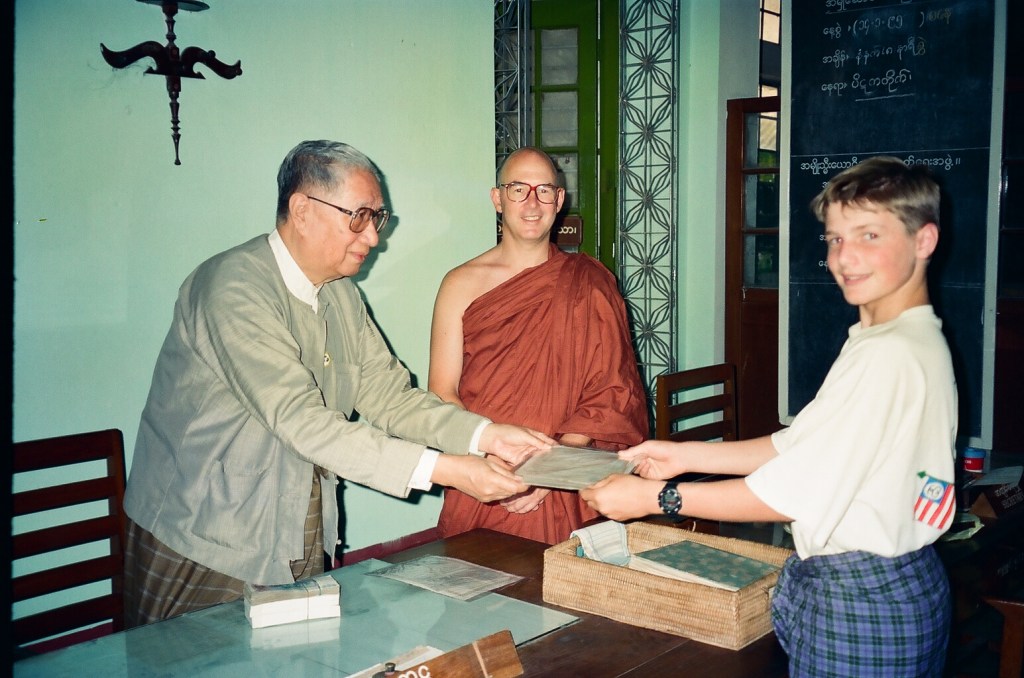
A short time after the ordination, U Aung Gyi, Nick and I met the lay chairman of Mahasi and Nick handed over our donation – see photo. The donation was to be split into two parts. One part was a contribution to a building program whereas the other was to help create a fund where the interest on the principal would be enough to feed all those at Mahasi. I was told it cost $1 per day for food for each of the 500 monks and nuns. It was fascinating for me to see when I returned to Mahasi about 15 years later with Nick’s close friend, Mitchell Brown that they had created a wall where the names of all donors were listed. It took us some time but eventually we found our donation – see photo.

We then headed off to meet the monk who had been my instructor for the disrobing ceremony. This took about 15 minutes and involved me having to tell him I no longer wanted to be a monk and he had to say that he had heard me. At the halfway point, my monk robes were removed but, before they were, I had to put a longyi on under my monk sarong so that I would not be naked when the monk sarong was removed.
I was back to being a normal man and Nick could finally give me that hug. It was a wonderful and unique experience to share with Nick and one which I know we will forever remember.
 Peter Church blog
Sadu, Sadu, Sadu.
Sent from my iPhone
>
LikeLiked by 1 person